
Toddler Years · Potty Training
Potty training, one proud step at a time.
There's no deadline and no perfect method. Here's how to spot when she's ready, set her up for success, and cheer her all the way to big-kid underwear.
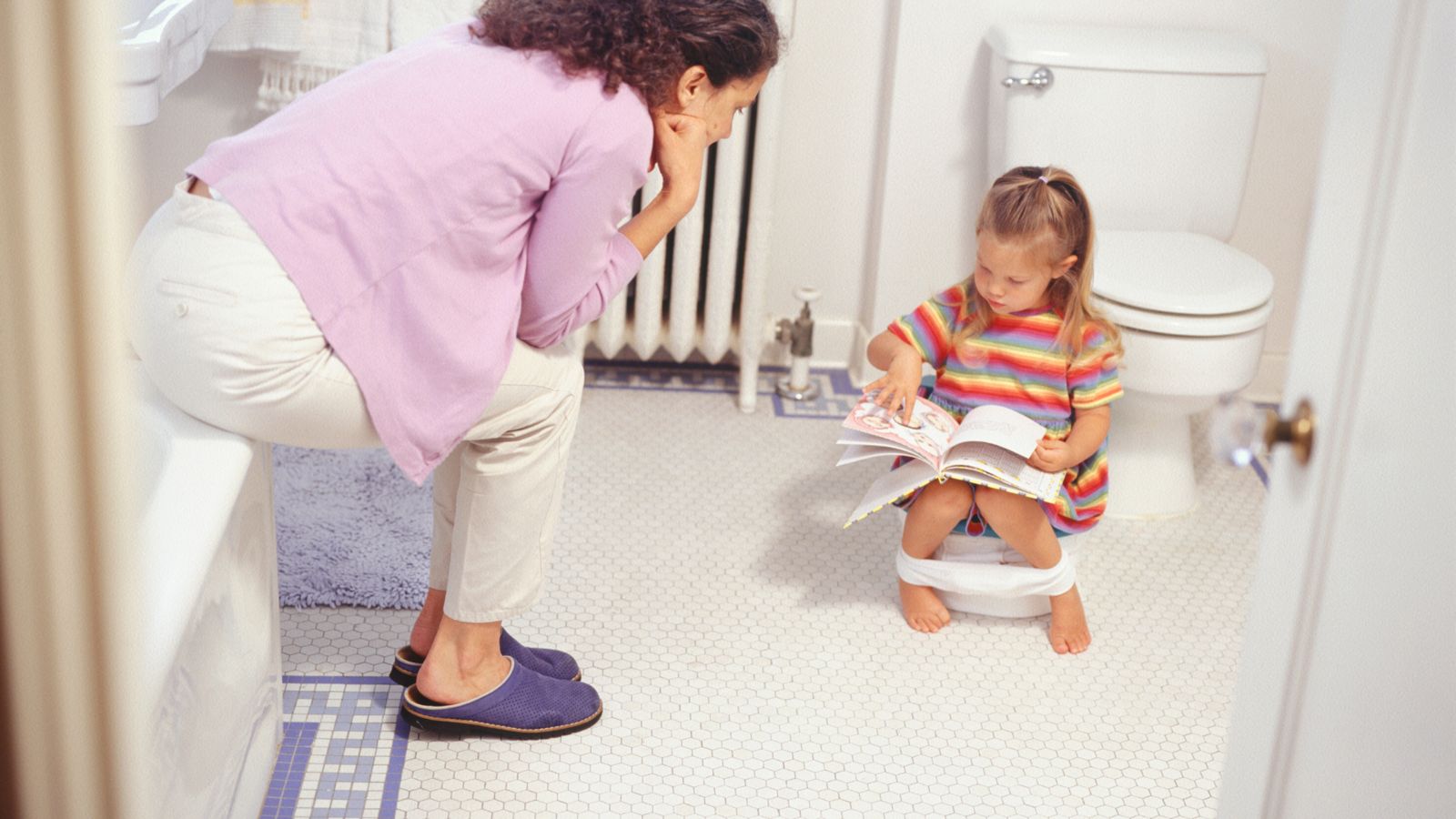
She comes running out of the bathroom with her pants around her ankles and the biggest grin you've ever seen. "I did it!" You both do a little dance in the hallway. It's a small thing, and it's also enormous: one more piece of the world she's learned to handle all by herself.
Potty training isn't a test with a deadline. It's a skill she learns when her body and mind are ready, with you as her biggest fan.
Ready is a set of signs, not a birthday
Mayo Clinic puts it plainly: potty training success hinges on milestones, not age. According to the American Academy of Pediatrics, children generally show signs of bladder and bowel control between 18 and 24 months, and the average age to begin in the United States is between 2 and 3 years. Most children in the U.S. are bowel and bladder trained by 4 years of age.
She may be ready when she:
- Stays dry for a while. At least 2 hours during the day, or after naps.
- Shows you she has to go. Grunting, freezing, squatting, hopping or tugging at her pants.
- Follows simple directions. And can walk to the bathroom and pull her pants down.
- Dislikes a wet diaper. She comes to you to be changed.
- Asks about it. She wants to use the potty or asks for big-kid underwear.
Big changes can make a good start harder. The AAP suggests it may be wise to wait after a move, a new baby or a family crisis.
Set up for easy wins
Start early with simple words for pee, poop and potty. When it's time, Mayo Clinic suggests putting a potty chair where she spends the most time and letting her play with it first. Dress her in loose clothes she can pull down herself. Help her sit for practice runs when she shows signs of needing to go, and if there are no signs, try every two hours, plus first thing in the morning and after naps. Keep each sit to five minutes or less.
Keep the routine the same every time, from wiping to handwashing, and make sure everyone who cares for her uses the same steps, as the AAP recommends.
Praise the try, not just the result
The AAP notes that children learn best when they are praised for their progress rather than punished for their mistakes. Cheer when she tells you she needs to go, and cheer when she sits and nothing happens. A hug, a high five or a sticker on a chart all say the same thing: you're doing great.
Accidents are part of learning
Every child has accidents. As Mayo Clinic says, accidents are inevitable and punishment has no role in the process. When it happens, stay calm, skip the scolding and shame, and help her into dry clothes. The AAP suggests a gentle, predictable response, like letting her help clean up, and telling her you're sure she'll do better next time. Keep a spare outfit with you and at child care.
After a couple of weeks of successful potty breaks and dry days, Mayo Clinic suggests moving to training pants or pull-ons, then to regular underwear once she uses the potty without prompting for a full day. Diapers or pull-ons can stay for sleep and long trips. If she resists for weeks, take a break and try again in a few weeks or months. That isn't failure. It's good timing.
Nights take longer, and that's normal
Staying dry through naps and nights usually takes longer than daytime training. According to Mayo Clinic, most children can stay dry at night between ages 5 and 7. Until then, nighttime diapers or training pants and a mattress cover keep everyone sleeping well.
When she takes a step back
Sometimes a child who seemed fully trained starts having accidents again. The AAP notes that common causes include a new sibling, a move, a change in child care, illness, constipation or family stress, and that even happy changes can be a lot for a little one. Regression usually doesn't last long.
Be gentle, ask softly what's on her mind, and keep the praise coming. If a setback lasts a month or more, it may be worth setting training aside for a while.
When to talk with her doctor
Her pediatrician may bring up toilet training at well visits around 18 months, 2 years, 2 and a half and 3 years, and you're always welcome to ask sooner. Mayo Clinic suggests checking in if she:
- Is older than 2 and a half and has no interest in toilet training.
- Is older than 3 and isn't trained during the day.
- Refuses to sit on the potty or holds in her stool.
The AAP also recommends seeing her pediatrician first if she regresses, to rule out a physical cause such as a urinary tract infection or constipation, and any time you have a concern before, during or after training.
Her own big win
Somewhere between the practice runs, the stickers and the happy dances, she'll figure it out, on her own timeline, with you cheering her on.
You've got this, Mama. One sit, one try, one proud little grin at a time.
Where this comes from
This article draws on guidance from the American Academy of Pediatrics and Mayo Clinic. It's here to help, not to replace your own doctor, midwife or pediatrician. If you have questions, ask them.
- The Right Age to Potty Train, American Academy of Pediatrics (HealthyChildren.org)
- Create a Potty Training Plan for Your Child, American Academy of Pediatrics (HealthyChildren.org)
- Potty Training Regression, American Academy of Pediatrics (HealthyChildren.org)
- Potty training: How to get the job done, Mayo Clinic