
Toddler Years · Milestones
First steps: the big day.
From pulling up on the couch to that first wobbly walk across the room, here's the joyful path to walking, and how to make your home ready for it.
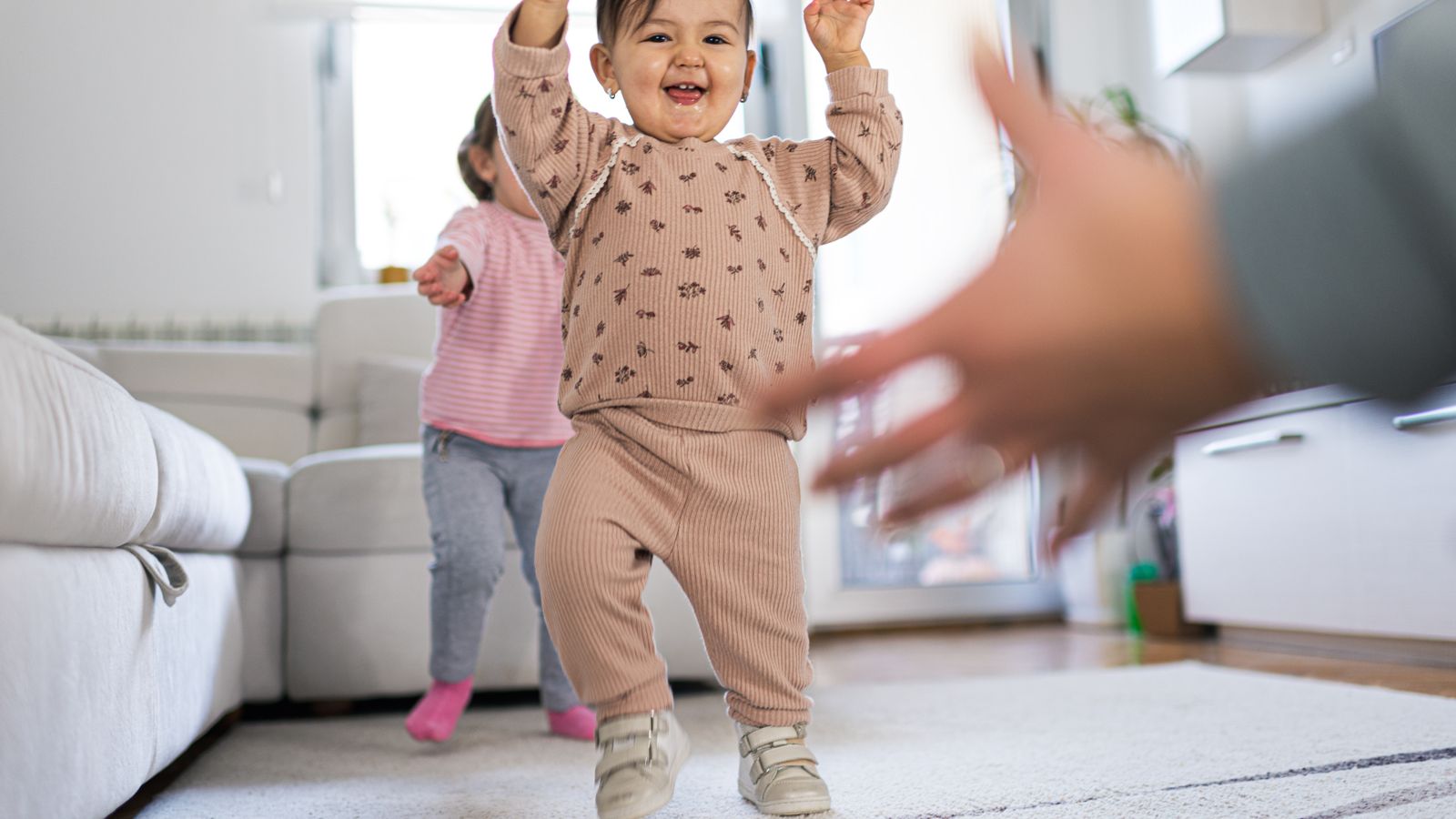
She's standing at the coffee table, one hand holding on, looking right at you. You kneel down a few feet away and open your arms. She lets go. One step, two, a little stagger, and she tumbles into your hug, laughing like she just won the world. You will replay that moment for the rest of your life.
First steps feel sudden, but they're the happy ending of months of hard work. Every roll, every scoot, every pull up on the edge of the couch has been building toward this. Here's what the journey usually looks like, and how to cheer her on.
Pulling up, then cruising
Long before she walks, she'll start pulling herself up to stand, and once she figures it out, she'll do it every chance she gets. The crib rail, the sofa, your pant leg: everything becomes a ladder.
Getting down can be trickier than getting up. You might find her standing and unsure what to do next. Gently show her how to bend her knees and lower herself to sitting. She'll catch on quickly.
Once she feels steady on her feet, she'll start cruising: shuffling sideways while holding on to furniture. Make sure whatever she grabs is sturdy, has no sharp edges, and is weighted or secured so it can't tip.
The path to walking
According to the CDC's "Learn the Signs. Act Early." milestones, most children:
- By 12 months. Pull up to stand and walk while holding on to furniture.
- By 15 months. Take a few steps on their own.
- By 18 months. Walk without holding on to anyone or anything, and climb on and off a couch or chair without help.
Many babies take their first steps around their first birthday, but walking a little earlier or a little later is perfectly normal. Once those first steps happen, most children go from wobbly to confident walking surprisingly fast.
One thing to skip: baby walkers. The American Academy of Pediatrics strongly urges parents not to use them, since babies in walkers can tip over and roll down stairs. A sturdy, weighted push toy or a stationary activity center is a safer way to let her practice.
Bare little feet at home
Indoors, she doesn't need shoes to learn to walk. The AAP notes that babies' feet develop best when they're not confined in shoes, and socks are enough to keep toes warm. There's something wonderful about watching those tiny bare feet find their balance on the floor.
Once she starts walking outside, shoes become important for protection. Look for closed-toe, flexible shoes with nonskid soles and room to grow, like sneakers. Little feet grow fast, so check the fit about once a month: her big toe should sit about a finger's width from the inside edge of the shoe.
Ready the house for a walker
A walking baby can suddenly reach places she couldn't last week. A few changes make your home a happy place to explore.
Gate the stairs. Keep stairways gated at all times.
Anchor furniture and TVs. Secure dressers, bookcases and mirrors to the wall with anti-tip devices. Metal brackets are sturdier than plastic. Mount flat-screen TVs to the wall, use an anti-tip device on any TV that isn't mounted, and never set a TV on top of a dresser.
Keep temptations low. Don't store toys or remotes up high where she might climb for them. Put heavier things in lower drawers and on lower shelves.
Clear the floor. Pick up small objects she could put in her mouth.
Stay close. New walkers are fast and curious. Keep her where you can see her.
Celebrate the big day
However it happens, it deserves a party. Clap, cheer, call grandma. Keep your phone nearby in the weeks when she's close, because first steps love to happen when nobody is filming.
Then make walking a game. Sit a few feet apart with your partner or a family member and let her toddle back and forth between your arms. Hold both her hands for a walk down the hallway. Let her push a sturdy toy across the room. Tumbles are part of the deal; a smile and a "you're okay, try again" go a long way.
Write the date down somewhere. You'll want to remember it.
When to check in with her doctor
Walking is one of the milestones her pediatrician will ask about at well visits, so it's a great time to share what you're seeing. Every child has her own timeline, but if she isn't walking without holding on by 18 months, or you have any concerns at any age, talk with her doctor and ask about developmental screening. Checking in early is always a good idea.
She's on her way
Every step she takes is a little braver than the last. Soon she'll be running to meet you at the door, and you'll wonder how those first wobbly steps ever happened so fast.
Here she comes, Mama. Open your arms wide. She's walking straight to you.
The date and the story of every first, ready to print.
Where this comes from
This article draws on guidance from the CDC and the American Academy of Pediatrics. It's here to help, not to replace your own doctor, midwife or pediatrician. If you have questions, ask them.
- Milestones by 1 Year, Centers for Disease Control and Prevention
- Milestones by 15 Months, Centers for Disease Control and Prevention
- Milestones by 18 Months, Centers for Disease Control and Prevention
- Movement Milestones in Babies 8 to 12 Months Old, American Academy of Pediatrics (HealthyChildren.org)
- Shoes for Active Toddlers, American Academy of Pediatrics (HealthyChildren.org)
- Preventing Furniture and TV Tip-Overs, American Academy of Pediatrics (HealthyChildren.org)