
Coming Home · Sleep
Baby sleep, month by month: how it grows.
From newborn naps in your arms to a toddler who sleeps the night, here's how her sleep changes over the first two years, and how to help it along.
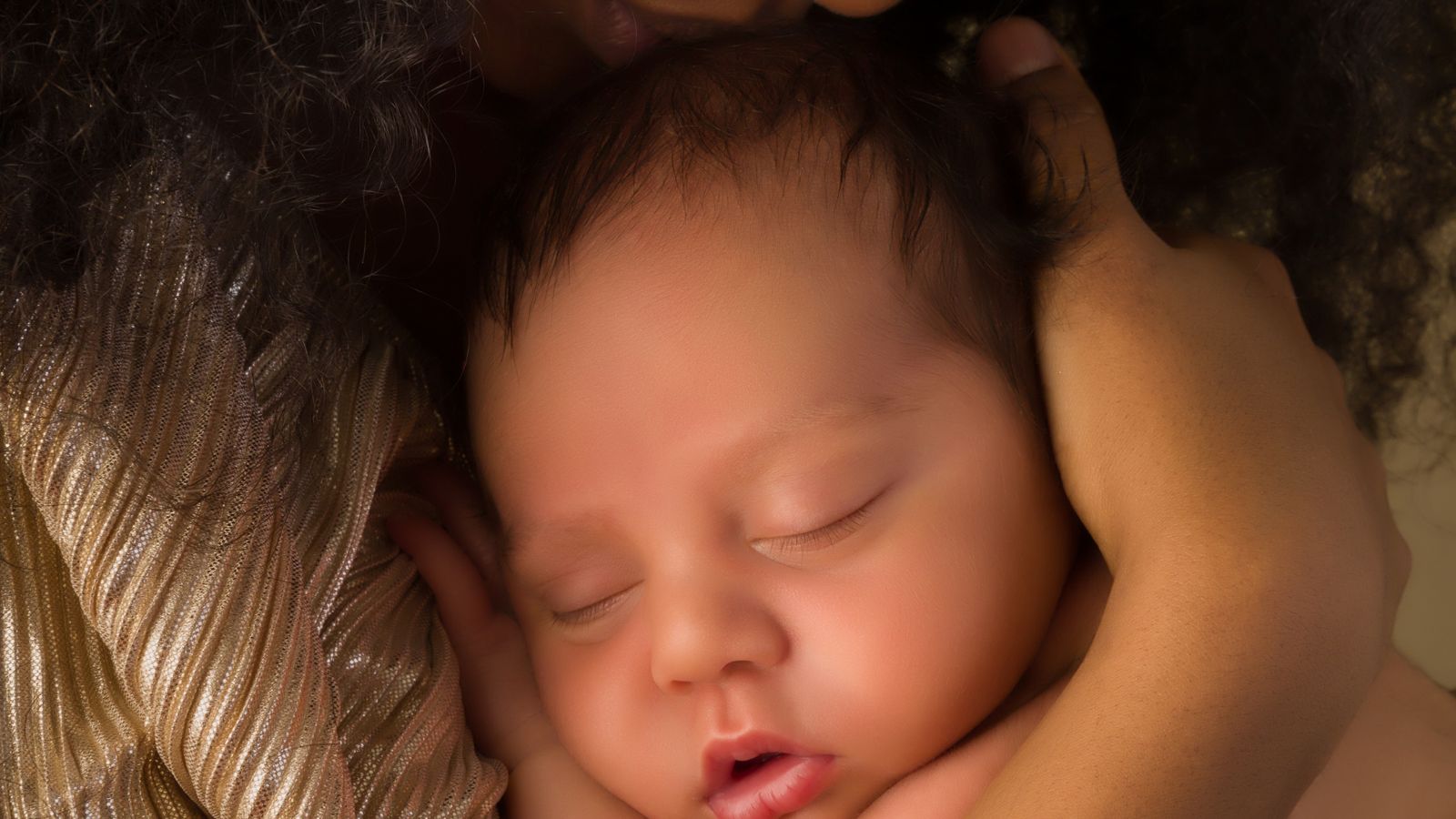
There's a sweetness to newborn sleep that you'll remember for years. The tiny sighs, the milk-drunk smile, the way she melts into your chest after a feed. Her sleep will change a lot over the next two years, and every stage brings its own small wonders.
Here's a simple map of what to expect. Every baby is different, and her rhythm will be all her own.
The newborn weeks: little sleeps, all day and night
Newborns sleep a lot, about 16 to 17 hours a day, according to the American Academy of Pediatrics. But they may only sleep 1 or 2 hours at a time, waking often to feed, day and night.
Babies don't have regular sleep cycles until about 4 months of age. So if the early weeks feel like one long, beautiful blur, you're doing it right.
Day or night? Helping her learn the difference
Newborns can't tell day from night yet. Their internal 24-hour clock, called the circadian rhythm, takes time to develop. You can gently help her learn.
- Bright, lively days. Keep her in bright or sunny spaces during the day. Talk, sing, read and play when she's awake.
- Calm, quiet nights. Keep the lights low at night. During night feeds and diaper changes, stay calm, speak softly and try not to wake her up more than you need to.
Little by little, her longest stretches of sleep will start to drift toward the night.
How sleep stretches grow
Somewhere between 4 and 6 months, many babies start sleeping longer at night. Cleveland Clinic notes that most babies sleep through the night by 6 months, which means sleeping five to six hours at a stretch without a feed. Some start around 4 months. Waking once or twice, or even more, is still common and normal.
Here's how much sleep the American Academy of Sleep Medicine recommends in each 24 hours, naps included:
- 4 to 12 months. 12 to 16 hours.
- 1 to 2 years. 11 to 14 hours.
There's no official recommendation for babies under 4 months, because newborn sleep is so varied. Naps change too. Between 4 and 12 months, some babies take one nap and some take two or three. By the toddler years, most move toward a single nap a day that doesn't last as long.
You may also hear about "wake windows," the time a baby is awake between sleeps. Cleveland Clinic describes them as about 30 minutes to an hour in the first month, growing to 3 to 6 hours by 10 to 12 months. They vary from baby to baby, and even nap to nap. What matters is that they slowly get longer.
A bedtime routine she can count on
A simple routine tells her body that sleep is coming. Cleveland Clinic suggests a 20 to 30 minute routine, like a bath, a lullaby and a book. Feeding at the start of the routine, rather than the very end, helps her learn not to need a feed to fall asleep.
The AAP's easy version is "Brush, Book, Bed": brush her teeth once they come in, read a favorite book or two, and get to bed at a regular time each night. Good sleep habits start from birth.
From about 4 months, the AAP suggests putting her down when she's drowsy but still awake. Babies who are always rocked fully to sleep may have a harder time settling themselves back down when they wake in the night.
The one thing to remember
Every sleep, every time: on her back, in her own crib or bassinet, on a firm, flat surface with nothing else in it. The AAP recommends placing babies on their backs for every sleep until 1 year of age. For the full, simple setup, see "Safe, sweet sleep: the simple setup."
When sleep takes a detour
Just when things feel settled, she may start waking more again. People call this a sleep regression. Cleveland Clinic explains that as babies' sleep shifts into lighter and deeper cycles, like ours, they may wake up a bit more for a while. These phases can line up with growth spurts and new milestones, and they typically last a week or two.
You may hear a lot about one around 4 months, but research hasn't shown that regressions happen at a set age for every baby. Keep your routine steady, and check the simple things: hunger, a wet diaper or a cold coming on. Call her pediatrician if a rough patch doesn't settle, if she seems unusually sleepy, or if something just doesn't feel right.
And you, Mama
Her sleep is a whole new skill for both of you, and tired is part of the season. Cleveland Clinic's advice is simple and kind: accept help when it's offered, let the housework wait, skip the social outing when what you really want is a nap, and let family or friends take a shift with the baby.
The night she sleeps a little longer
One morning you'll wake up, look at the clock and realize she slept a long, sweet stretch. You'll probably tiptoe over just to watch her breathe. That's her growing, one night at a time, with you right beside her.
Sweet dreams to you both, Mama. Her sleep will grow, and so will your confidence.
Her age and when she woke up tell you when the next nap is likely.
Where this comes from
This article draws on guidance from the American Academy of Pediatrics and the American Academy of Sleep Medicine. It's here to help, not to replace your own doctor, midwife or pediatrician. If you have questions, ask them.
- Child Sleep Duration Health Advisory, American Academy of Sleep Medicine
- Getting Your Baby to Sleep, American Academy of Pediatrics (HealthyChildren.org)
- Brush, Book, Bed, American Academy of Pediatrics (HealthyChildren.org)
- When Do Babies Sleep Through the Night? Sleep in Your Baby's First Year, Cleveland Clinic
- How Much Sleep Do Kids Need? Recommended Hours by Age, Cleveland Clinic
- What Are Baby Wake Windows? And How Long Should They Be?, Cleveland Clinic
- Infant Sleep Regression: What Parents Need To Know, Cleveland Clinic